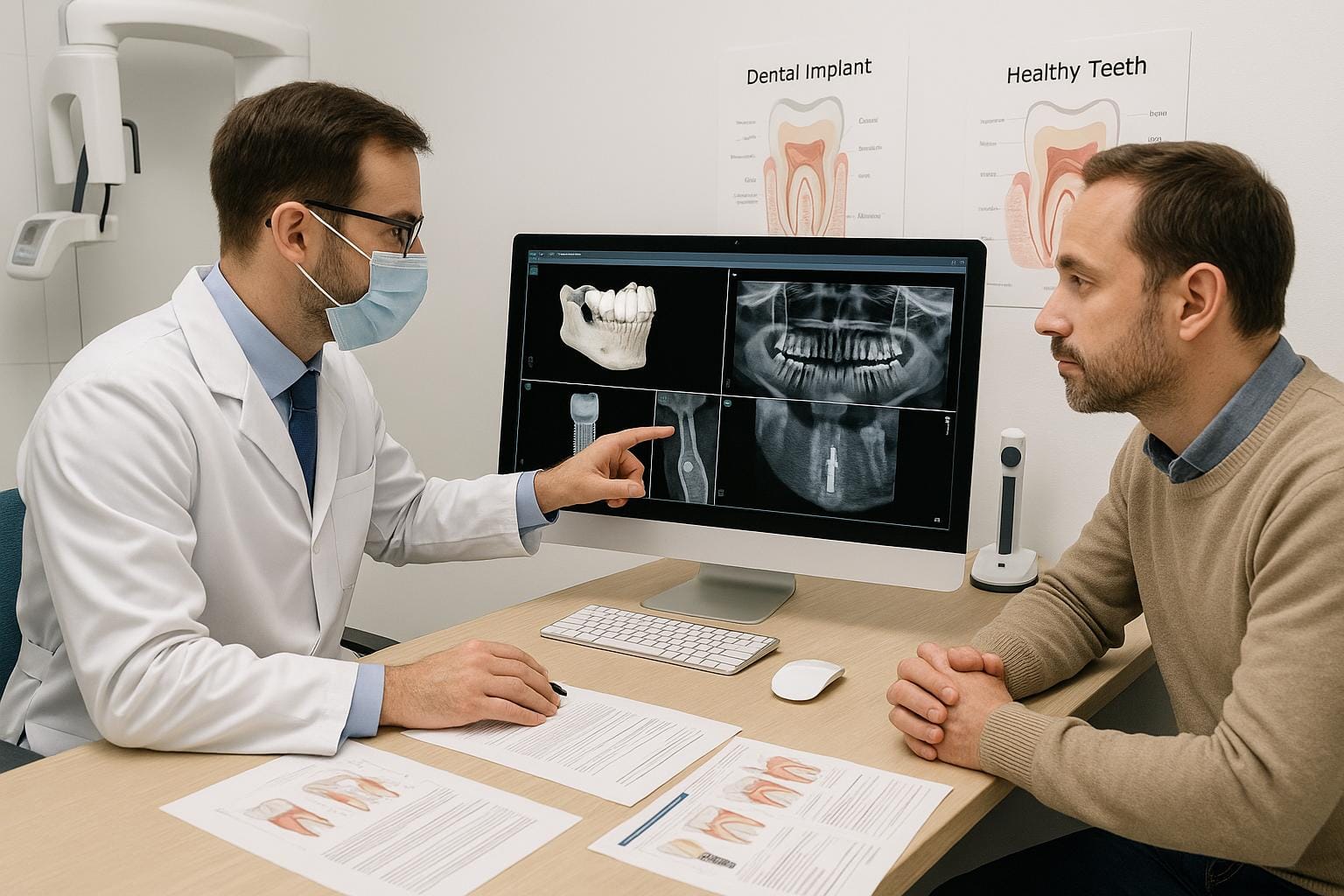
Missing teeth can affect how you chew, speak and feel about your smile. Whether you have lost a tooth because of decay, an injury or another dental problem, understanding your replacement options is an important step towards maintaining your oral health.
Dental implants in Dubai are one option patients may explore when looking for a replacement for missing teeth. An implant can provide support for a crown, bridge or denture, depending on the treatment plan. However, implant treatment is not suitable for everyone, and the right approach depends on your gums, jawbone, general health and individual dental needs.
Who Can Benefit From Dental Implants in Dubai?
Patients With One Missing Tooth
A single implant can support a replacement crown in suitable cases. Unlike a conventional tooth-supported bridge, an individual implant crown generally does not require neighbouring teeth to act as supports.
The dentist must assess the surrounding teeth, gum health and available bone before recommending treatment.
Patients With Multiple Missing Teeth
When several teeth are missing, implant-supported bridges may provide an alternative to replacing each missing tooth individually.
The number and position of implants depend on the patient’s anatomy, bite, bone condition and restorative requirements.
Patients Who Find Dentures Uncomfortable
Some people experience movement or discomfort with removable dentures. In selected cases, implants may help improve denture stability.
The suitability of this approach depends on bone availability, oral health, medical history and the type of denture being considered.
Patients With Teeth That Cannot Be Restored
A severely damaged tooth may sometimes require extraction and replacement. However, the dentist should first determine whether the natural tooth can be preserved.
Dental implants are one possible replacement option, but the decision should be based on a clinical examination and a comparison of appropriate alternatives.
Types of Dental Implant Treatments
Single-Tooth Dental Implant
A single-tooth implant is designed to replace one missing tooth with an implant-supported crown.It may be considered when the surrounding teeth are healthy and there is sufficient bone to support the implant.
Multiple Dental Implants
Patients missing several teeth may need more than one implant. Depending on the arrangement of the missing teeth, implants may support individual crowns or a bridge.The treatment plan should consider chewing forces, bone support and the long-term maintenance of the restoration.
Implant-Supported Bridge
An implant-supported bridge replaces several teeth using implants as its foundation. It can be an option when multiple adjacent teeth are missing.The number of implants and the design of the bridge depend on the clinical assessment.
Implant-Supported Dentures
For some patients who have lost most or all teeth in an arch, implants can support or stabilise a denture.This approach may improve stability compared with a conventional removable denture, but it involves careful planning, ongoing cleaning and professional follow-up.
How Does the Dental Implant Procedure Work?
Step | Procedure | What Happens |
|---|---|---|
1 | Initial Consultation | Dentist checks oral health, gums, teeth and medical history. |
2 | Treatment Planning | Suitable treatment, scans and costs are discussed. |
3 | Implant Placement | Implant fixture is placed into the jawbone. |
4 | Healing & Integration | The implant integrates with the surrounding bone. |
5 | Final Restoration | Crown, bridge or denture is attached. |
6 | Follow-Up & Maintenance | Regular dental check-ups and proper oral hygiene help maintain the implant. |
Frequently Asked Questions About Dental Implants
Find answers to common questions about dental implants, treatment costs, recovery, suitability and long-term care in Dubai.
Dental implants are devices placed in the jawbone to support replacement teeth, such as crowns, bridges or certain dentures. They may be an option for people who have lost one or more teeth.
The cost depends on the number of implants, implant system, restoration type, diagnostic imaging and whether additional procedures are required. Ask for a personalised, itemised quotation.
Dental implants can remain functional for many years, but their lifespan is not guaranteed. Oral hygiene, smoking, general health and regular professional maintenance affect long-term outcomes.
Anaesthesia is used during implant placement to help manage pain. Temporary discomfort, swelling or bruising may occur afterwards, and the dentist will provide appropriate aftercare instructions.
Treatment often takes several months because the implant may need time to integrate with the jawbone before the final restoration is attached. The timeline varies by patient.
Active gum disease generally needs to be assessed and treated before implant placement is considered. Healthy gums and regular maintenance are important for implant health.
Age alone does not determine suitability. The dentist considers general health, bone condition, oral hygiene, medications and the patient's ability to undergo treatment and attend follow-up visits.
Some people with diabetes may be suitable for implant treatment. However, blood sugar control and other medical factors can affect healing. The dentist may recommend additional assessment or medical advice.
It depends on the patient's needs, oral anatomy, budget and preferences. Implants can support fixed teeth or stabilise certain dentures, while conventional dentures remain a non-surgical option for some patients.